

This is prediction of the future of humans in space based on real forces: economic, political, market, technological breakthroughs, ...
The story so far
X Prize and Bush's moon plan -> Driving new efforts, changing the way NASA funds stuff, SpaceX starts deliveries
The X Prize was conceived by Peter Diamandis and founded in 1995 with the purpose of encouraging a return to space, and for Diamandis, with the added reason that he wanted to go there someday.1 The prize gave US$10 million to the first non-government spacecraft to go to space twice in two weeks.
|
The prize was won on October 4, 2004 when Scaled Composites' suborbital spaceship, SpaceShipOne, flew to space twice in two weeks. Scaled Composites was legendary aircraft designer Burt Rutan's company and SpaceShipOne was a project of his before he'd even heard of the X Prize. This was only a suborbital flight, a brief hop up to above 62 miles (100 kilometers) and back down again. But it was done by a small private company and had duplicated what it took the giant NASA to do in 1962 with the Mercury program. It showed NASA just what private industry was capable of doing for relatively little money. Prior to this NASA would hire private enterprise as contractors, paying them for the work ahead of time with a cost plus arrangement. NASA's new approach after this point was to treat private enterprise more as service providers, and pay them only on successful completion of the work, not specifying how the work was to be done. |
|
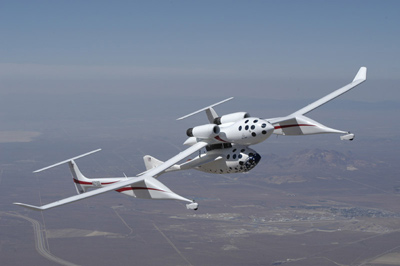
Also in 2004, Presdident Bush directed NASA to return to the moon. To focus on such a gargantuan task, NASA realized it would have to hand off some of the near-Earth work to others so it could focus on the harder stuff, and with its new understanding of what space entrepeneurs could do, it began to do just that. Even though Bush's plan was cancelled, NASA kept the idea of handing-off some of the work for low-Earth orbit to entreperneurs while focusing further out.
On October 10, 2012, private space company, SpaceX, berthed with the International Space Station (ISS), and subsequently delivered its first cargo under a Commercial Resupply Services contract with NASA. See below for more about SpaceX.
On September 16, 2014, NASA announced that SpaceX's Dragon and Boeing's CST-100 Starliner had been selected as the spacecraft that will be carrying crew to and from the ISS by 2017.
Near term developments for humans in space (2011 - 2017)
Cancellation of the US space shuttle program -> Private launchers
The termination of the US space shuttle program for economic and political reasons has opened up an opportunity for private investment in new launchers and crew capsules for getting from the Earth to Low Earth Orbit (LEO). Five such private companies are Space Explorations Technologies Corp., better known as SpaceX, Boeing, Blue Origin, SpaceDev Inc. and Orbital Sciences Corp.
|
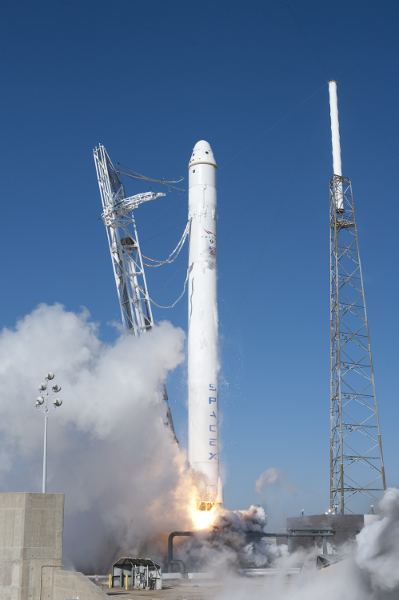
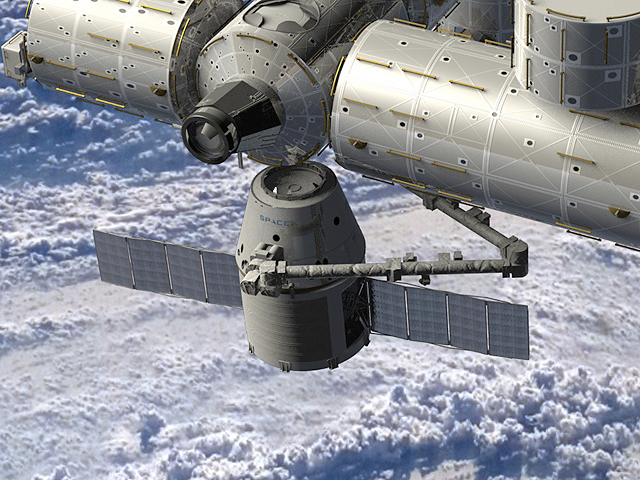
SpaceX has its Falcon 9 launch vehicle and the Dragon spacecraft which rides atop it. Dragon is capable of carrying seven people or cargo as well as carrying scientific payload for performing experiments in orbit. On May 25, 2012, SpaceX succeeded at becoming the first privately developed spacecraft to successfully dock with the International Space Station (ISS) and on October 10th began its contract supply runs. On September 16, 2014, SpaceX was selected as one of the contractors to carry crew to and from the ISS. SpaceX plans to have a crew carrying Dragon ready in 2017. Bigelow Aerospace also plans use the Falcon 9 and Dragon for getting to/from Bigelow's Alpha Station. As well, the Dragon will also be used as a free-flying spacecraft for performing scientific experiments and technology demonstration under the name DragonLab. |
|
|
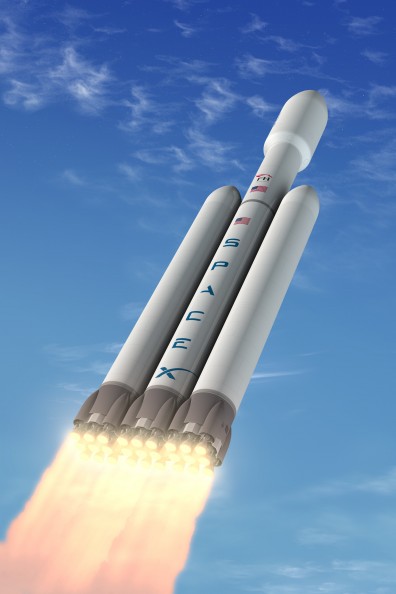
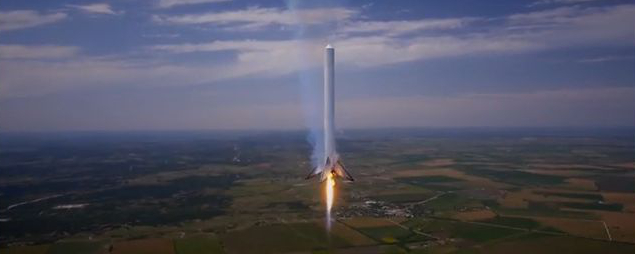
SpaceX is also working on its Falcon Heavy launch vehicle capable of lifting 53,000 kg (117,000 lb) to LEO. That's double what the space shuttle or the Delta IV Heavy can do. From the start it is designed with carrying humans in mind, designed with structural saftey margins of 40% above flight loads, compared to the 25% of other rockets, along with other safety features. Two Falcon Heavy's should be capable of carrying humans to the moon, one to get there and a second for the return vehicle. A single Falcon Heavy would be able to launch SpaceX's Dragon spacecraft on a flyby around the moon. The Falcon 9, Falcon Heavy and the Dragon are intended to be partly reusable spacecraft. Initially it was considered making them fully reusable but it was decided that all but the 2nd stage rocket could be reused. Toward that end SpaceX completed the Grasshopper program in 2013 wherein it used a single engine rocket and fixed landing legs. Testing was done with the F9R rocket, a Falcon 9 v1.1 with landing legs that is stowed on liftoff and extend just before landing. The R stands for resuable. On December 21, 2015 SpaceX succeeded in sending a payload to orbit while landing the 1st stage booster back on land to near where it launched. On April 8, 2016 it succeeded in sending payload to the ISS while landing the 1st stage booster on a droneship in the Atlantic Ocean downrange of the launch site in Florida. |
|
|
|
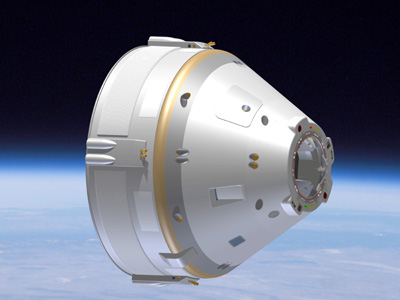
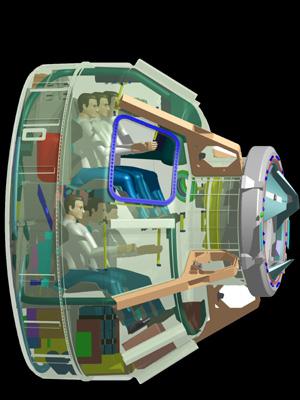
Boeing is developing the CST-100 Starliner (Crew Supply Transportation 100 Starliner) capsule to carry crew of seven to/from the ISS, and on September 16, 2014 won a contract to do so. Their current plan is to fly the first crew to the ISS in mid-2017. It'll launch atop United Launch Alliance's Atlas V rockets. Also, Bigelow Aerospace is working closely with Boeing so that the CST-100 will be able to carry people to/from the planned Bigelow Alpha Station. Boeing is designing the CST-100 capsule so that it can be reused up to 10 times, though unlike with SpaceX's plans for its Falcon 9 rocket, the Atlas V rocket is not reusable. |
|
|
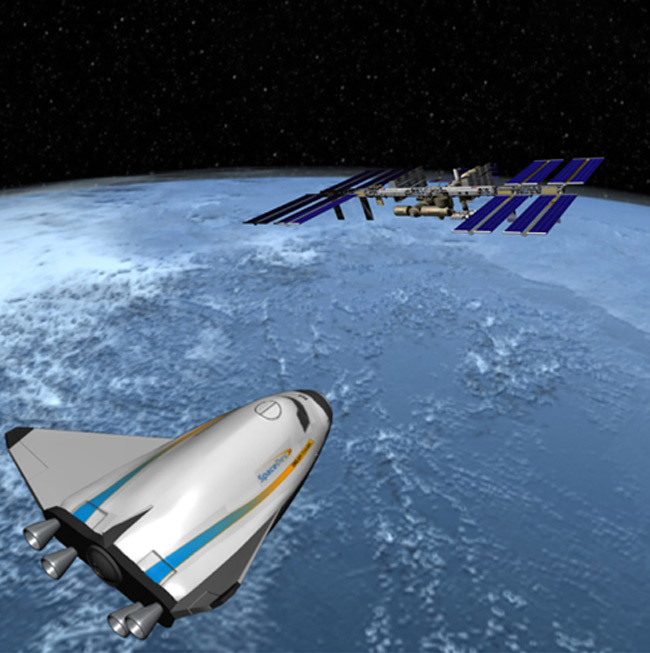
Sierra Nevada Corporation (SNC) Space Systems, is working on its Dream Chaser which will launch atop United Launch Alliance's Atlas V rocket. It's designed to carry a crew of seven and could be adapted to carry cargo and to service satelites in space. It has wings and will land horizontally on a runway. The Dream Chaser was a contender for a contract from NASA to carry crew to and from the ISS but on was not selected. However, on January 14, 2016, the Dream Chaser was awarded a contract to carry cargo to and from the ISS. |
|
|
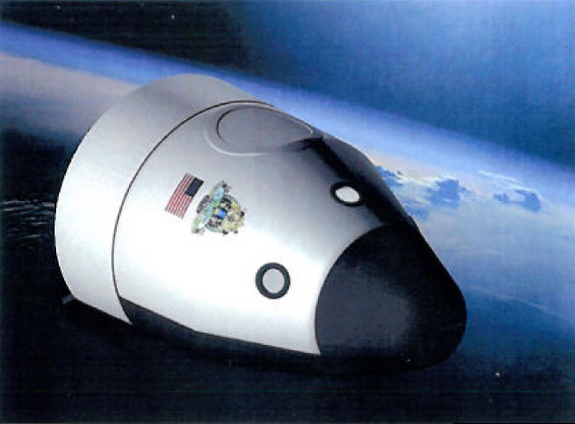
Blue Origin is working on a suborbital approach first, to be followed by the ability to go to orbit. For going to orbit, as with SpaceX, they plan on having their hardware be reusable, both the 1st stage booster used to get off the ground and the capsule that'll fly in space. The booster will land vertically while the capsule will return via parachute. The 2nd stage will be expendable after propelling the capsule to orbit. For the 1st stage booster they're developing their BE-4 engine which they expect to be flight-ready in 2017. |
|
|
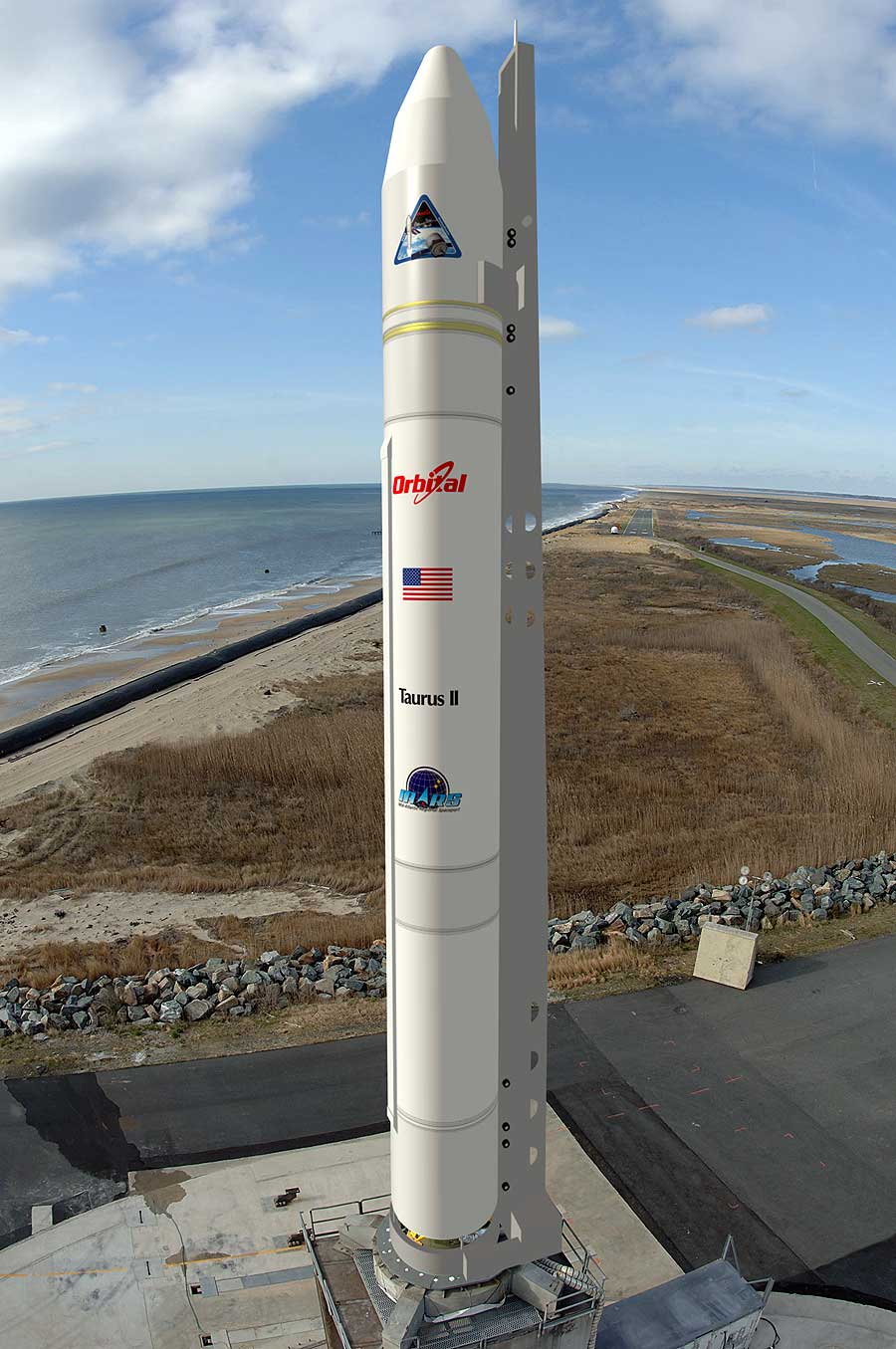
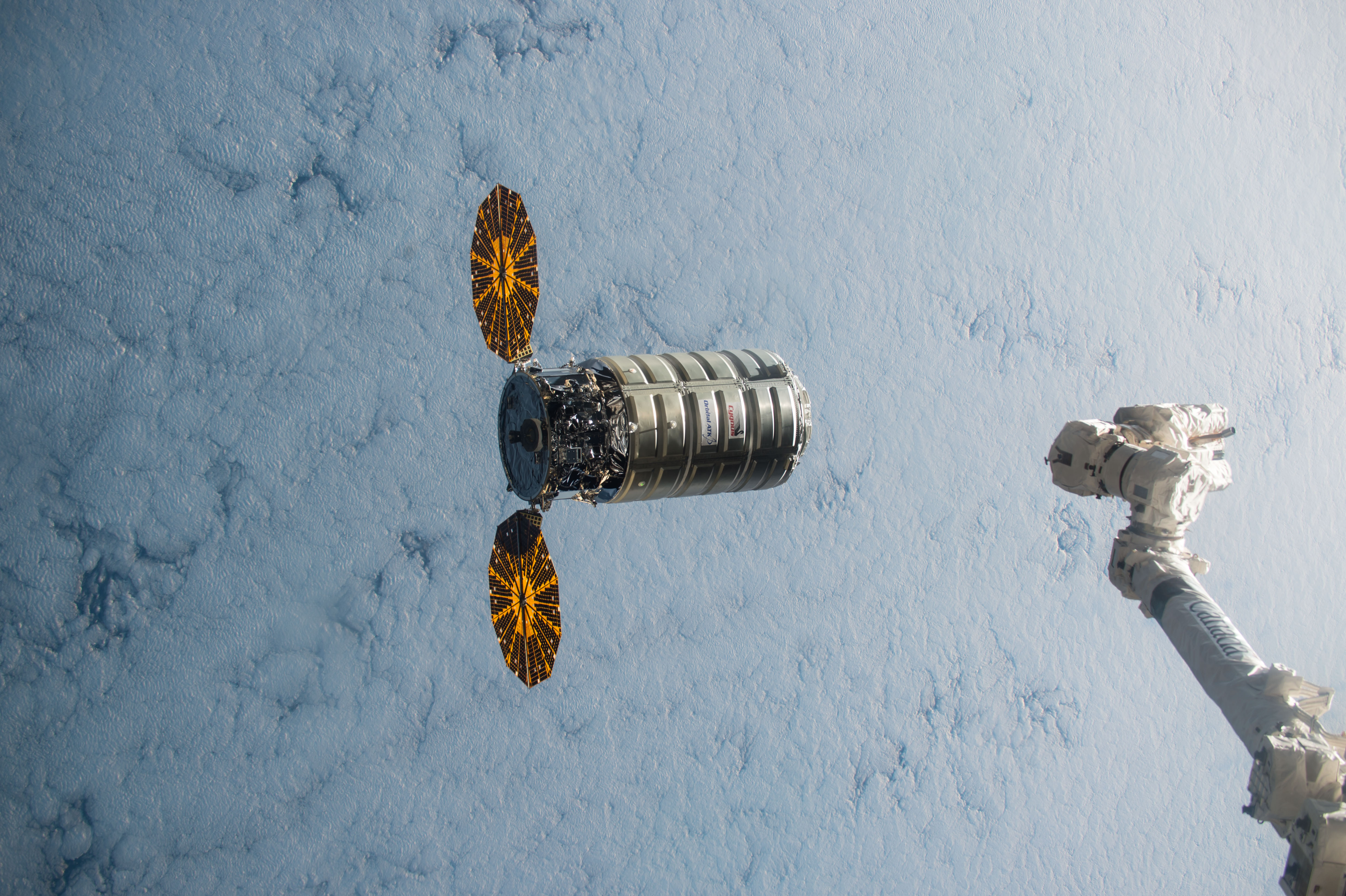
Orbital Sciences Corp. has its Cygnus spacecraft to carry cargo to the ISS as well as dispose of ISS waste. The Cygnus at first rode atop their Antares rocket but after an explosion during launch on October 28, 2014, the Cygnus is now carried atop an Atlas V rocket. Cargo resupply missions to the ISS began in February 2014. |
|
Inflatable habitat technology -> Bigelow's Alpha Station
|
In 1992, under the Space Exploration Initiative (SEI), NASA began working on plans for a manned Mars mission. In order to satisfy the requirements for a low mass, yet large living space for the astronauts they researched the idea of an inflatable habitat, called a Transit Habitat or TransHab. For budgetary and political reasons the SEI was abandoned. In 1997 the TransHab idea was revitalized as a possible module for the ISS, up to the point where an actual full scale module was built and tested in a vacuum chamber. Due to cost overruns, this too was cancelled in 2000. |
|
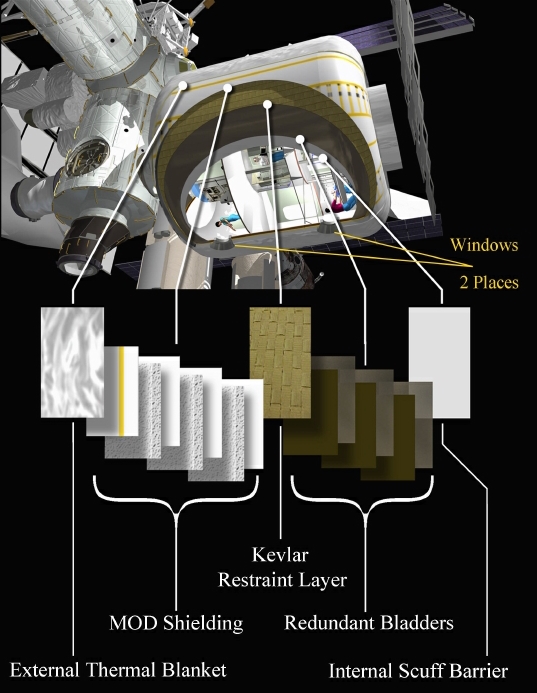
In the late 1990's Bigelow Aerospace was formed and licensed the TransHab technology from NASA. In 2006 Bigelow launched their first small scale test habitat, Genesis I, into orbit, followed by Generis II in 2007.
|
NASA is paying Bigelow $17.8 million for a test habitat called BEAM (Bigelow Expandable Activity Module) which was attached to the ISS on April 16, 2016 for a 2 year period for purposes of testing the technology against radiation and meteorite hazards. BEAM is 13 feet long by 10 feet in diameter. The module will remain closed most of the time and astronauts will enter it periodically for inpection. It was carried up on a SpaceX Falcon 9 rocket and housed in Dragon's trunk, the cylinder that Dragon is attached to for much of its flight up. |
|
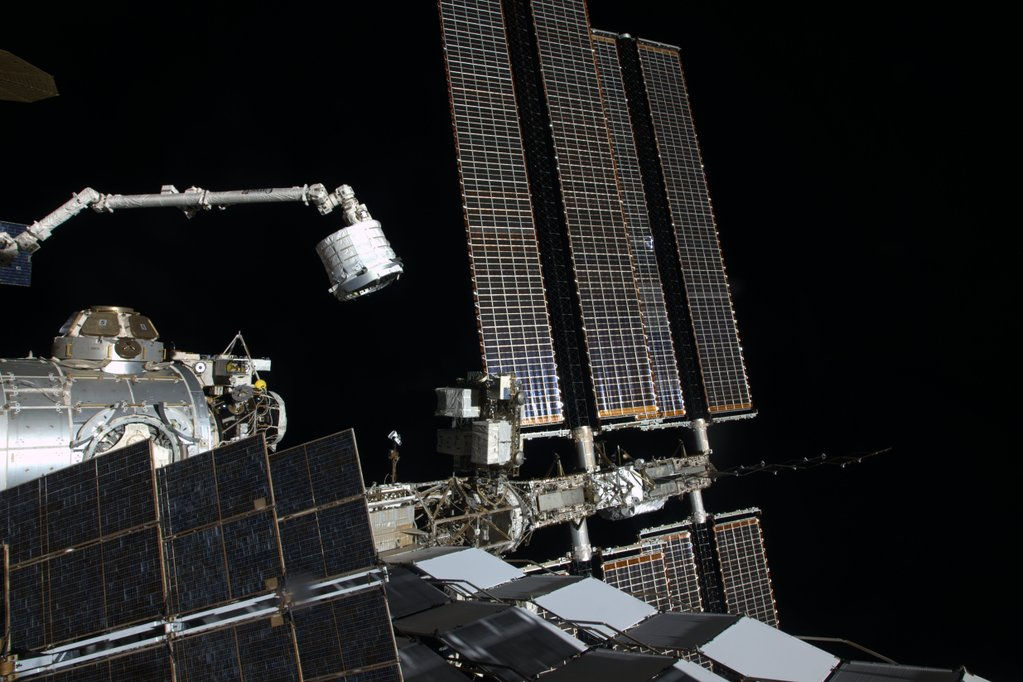
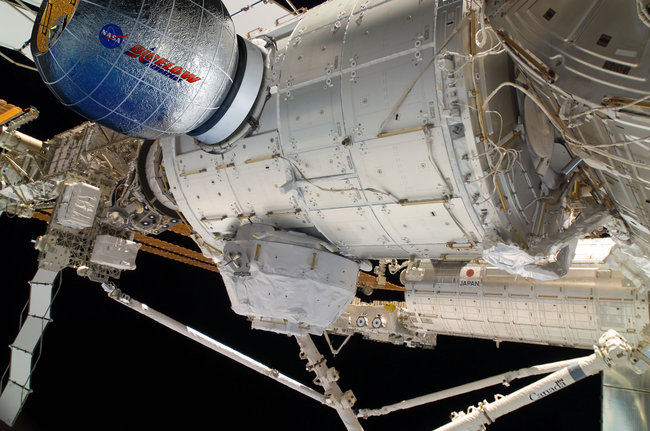
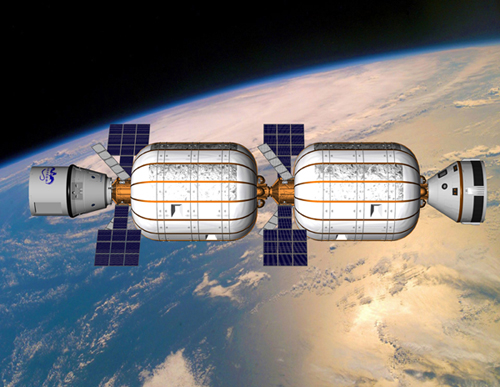
In April 2016 Bigelow and United Launch Alliance announced a partnership to develop and deploy inflatable habitats in space in the form of a space station based on one or more Bigelow's BA330s, a 330 cubic meters (12,000 cubic feet) habitat. The timeframe is expected to be in 2019 or 2020.
Robert Bigelow has also stated that prior to that he is in talks with NASA to attach an initial BA330 to the ISS.
|
Visionary millionaires
Besides political/budgetary/technological side effects from NASA some of this new movement into manned space flight is due to visionary millionaires and billionaires.
Elon Musk founded SpaceX in March 2002. But before SpaceX, he was the co-founder of the massive internet success, PayPal, which was sold to eBay in October 2002. In April 2004 he co-founded Tesla Motors, a company whose purpose is to eventually sell afforable electric vehicles to the mass market. He has stated that one of his goals is to make life multiplanetary with a focus on colonizing Mars. After a realization that a big stumbling block is the cost of the rockets, he founded SpaceX. The Falcon 9 is intended to be the first fully reusable orbital rocket, significantly reducing costs.
Robert Bigelow founded Bigelow Aerospace in 1998 with much of the funding coming from his fortune amassed from his Budget Suites of America hotel chain. Robert Bigelow had dreamed of establishing a permanent human presence in space since a young age but knew he had to make money to do it. And so he did, in the form of his hotel chain. When NASA cancelled TransHab in 2000, Bigelow bought the rights to it and the rest will be history.2
Space tourism
The market for space tourism is another driving force that exists and will grow. Bigelow Aerospace is targeting corporations and governments as customers for their Alpha Station, but not tourists. However, the ISS will continue to be a tourist destination and there will possibly be other space stations in Earth orbit for this purpose. The space tourism company, Space Adventures, has an agreement with the Federal Space Agency of the Russian Federation and Rocket Space Corporation Energia for three more tourists who will use the Russian Soyuz spacecraft to visit the ISS beginning in 2013.
Asteroid resource prospecting and mining (2015- )
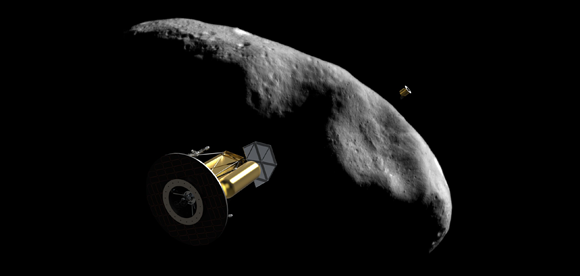
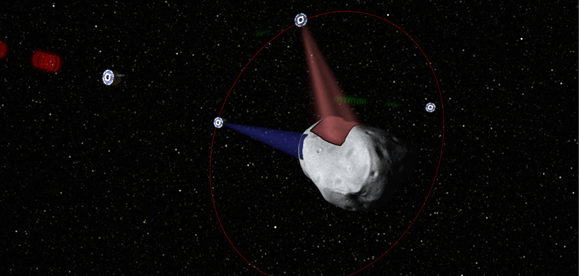
Planetary Resources, Inc. plans to mine near Earth asteroids for water, platinum and other valuables. Their vision is to make the resources in space available to people both in space and on Earth. The two co-founders and co-chairmen are Peter Diamandis (the founder of the X Prize) and Eric Anderson.
Their approach is threefold. They'll first send up craft to identify all of the most valuable near Earth asteroids and how to reach them. Actual mining would commence a decade later. As resources are mined they'll deliver them to wherever they're needed.
Water in deep space is estimated to be worth $20,000 to $50,000 per pound and so they plan to go after that first. This will be done by enveloping the asteroid and then heating it up. That will release the volatiles, such as water, which will be collected. One result will be a fuel depot since water is made up of hydrogen and oxygen both of which are used as spacecraft propellent. After that they plan to go after other resources, mainly precious metals, including platinum which is $1500 an ounce.
Their approach will be to use only robots, not people. They've created a line of spacecraft called the Arkyd series which will be involved in the prospecting phase. The series that follows the Arkyd will begin the material collection and processing in support of asteroid mining.
On July 16, 2015, Planetary Resources' first spacecraft, the Arkyd 3 Reflight (A3R), was deployed from the International Space Station (ISS) for a 90 day mission.
|
|
|

Robotic moon resource exploration (2016- )
Google Lunar X Prize -> Robotic explorers on the moon
In September 2007, the X Prize Foundation announced the Google Lunar X Prize. Sponsored by Google, it's a total of $30 million intended to stimulate privately funded missions to the moon.
The first prize is $20 million for successfully landing on the moon, travelling 500 meters (1,640 feet) and transmitting back high definition images and movies. An additional $4 million prize is offered for completing other objectives including travelling over 5 kilometers; for surviving the lunar night, when temperatures can get down to -210C (-346F) that of liquid nitrogen; for detecting water; and for making a precision landing near an Apollo site or other sites interest (such as other landings/crashings of man-made hardware.) And there's $1 million for the team that "greatest attempts to promote diversity in the field of space exploration". $5 million goes to the team that comes in second.
The deadline is December 31, 2017. Contestants have until the end of 2016 to announce verified launch contracts to be qualified to compete.
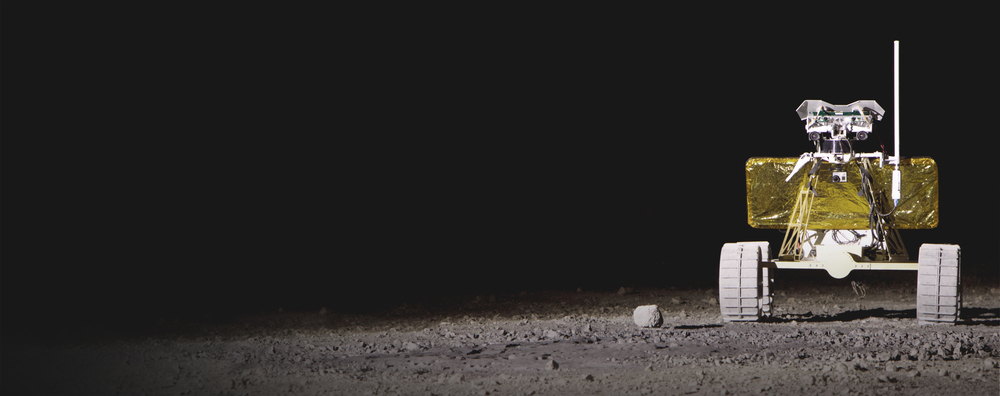
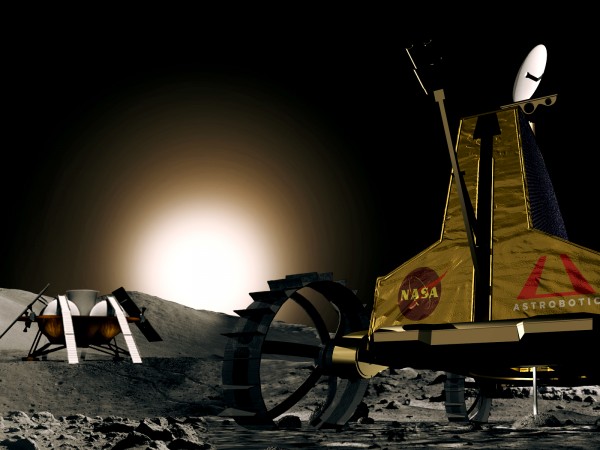
Astrobotic Technology is now planning on launching on a SpaceX Falcon 9 rocket for their X Prize attempt in the second half of 2016. The original plan was to send a rover named Red Rover to the Apollo 11 landing site but in July 2011, NASA set a 75-meter keep-out zone around the site and so Astrobotic decided to not go there.
|
|
|
|

|
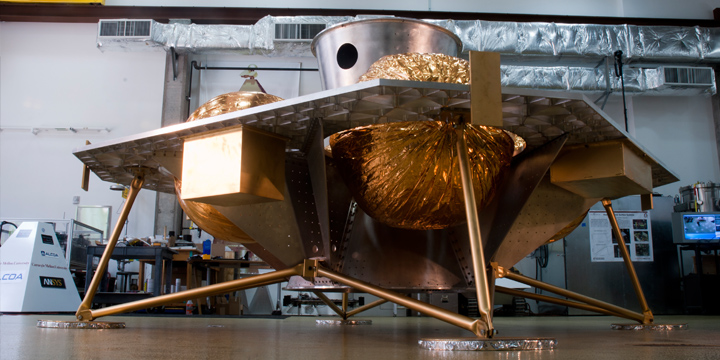
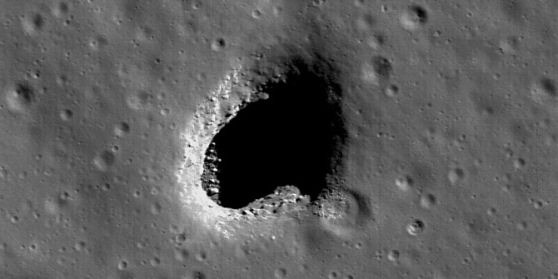
As of February 2015, Astrobotic's plan is to send a newer generation rover called Andy to a lunar skylight, a hole in the lunar surface exposing an open volume underneath. The lander that will get it there is called a Griffin, a workhorse that will also be used for other missions to get rovers and payloads to the lunar surface. Along for the ride as a customer will be another X Prize competitor from the Japanese team HAKUTO with its twin rovers Moonraker and Tetris.
Skylights are formed when the ceiling of a cavern collapses. They could be locations for housing lunar habitats since they provide a level of protection from meteorites and radiation. The plan is to launch the mission on a Falcon 9 rocket in the second half of 2016. The destination is Lacus Mortis, latin for Lake of Death, in which there is a rille called Rimae Burg. A rille looks like a valley formed either by erosion or an empty lava tube that was formerly running underground just under the surface and has collapsed leaving the valley-like formation. These collapsed lava tubes offer possible entry to still underground areas. Near Rimae Burg are also some pit craters which look to have skylights, holes which also extend underground.
Taken alone, this is not significant to the future colonization of space but they plan to follow with further expeditions. That includes one involving a rover called Polaris which is slated to go to the moon's north pole. Polaris will use a neutron spectrometer to detect hydrogen below the lunar surface, indicating the presence of either water or methane. It will then drill for samples to be analyzed by onboard instruments. A near infrared spectrometer will look for variations in surface temperatures hinting at the ice below the surface.
Astrobotic plans to make money by selling lunar data gathered on their expeditions, selling payload space, selling services rendered with its vision systems and manipulators, producing and selling media and through sponsors. Companies that wish to do prospecting for mining opportunities, for example, can use Astrobotic's services to do so.
Astrobotic Technology is just one upcoming example of a provider of these types of services. Others may also arise. The result will be a relatively low cost and low risk way of understanding lunar resources and techniques for exploiting those resources. From this, companies and governments can then progress to the next stage, actual exploitation of lunar resources using moonbases, robotics and humans.
Long term developments for humans in space (2017- )
A moonbase built of inflatable modules
|
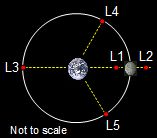
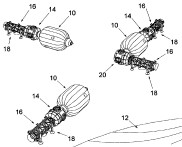
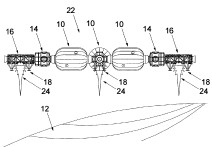
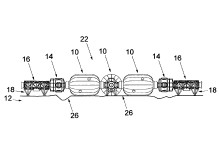
Robert Bigelow has said that the ultimate aim of his investment in Bigelow Aerospace is to get to the moon. The plan would be to send the individual components of the base to L1, a location between the Earth and the moon where the Earth's and moon's gravities balance out, to assemble the components into a moonbase, and then to move it all on to the moon.3 At the Bigelow facility in Las Vegas is a model showing what such a moonbase would look like using what appear to be Bigelow's BA 330 inflatable modules. It consists of three inflatable modules, four propulsion buses, connecting nodes and landing pads (see diagram below.) The big question is why would any corporations or governments would pay Bigelow in order to lease space in a moonbase. Governments would do it for research purposes and to find opportunities for future economic gain. Corporations would do it to supply moon resources to governments and corporations who need those resources either on the moon or in space around the Earth-moon system, but that presupposes that such an economy in space exists. |
|
|
|
|
And before any customers can journey to the moon on a regular basis, a transportation system for doing so must exist. Doing so using one-off Saturn V sized rockets, the ones used to send men to the moon in the late 1960s and early 1970s, is simply not sustainable. However, Elon Musk has stated that his Falcon Heavy can send people to the moon in two flights, one to get people there and one to send the return spaceship. As stated above, the Falcon Heavy is intended to be reusable.
Mars One - Permanent human settlement on Mars with first settlers scheduled for 2027
Mars One plans to begin a human settlement on Mars, with the first four settlers arriving there in 2027. The key to making it affordable is that there would be no return flight back to Earth; it's a one-way trip. The endeavour is to be funded by sponsors and from revenue made by selling broadcasting rights. The process will be filmed with the settlers lives on camera. The settler application process began on April 22nd, 2013.
|
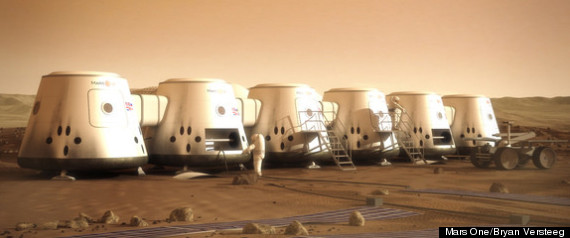
The settlement is planned to consist of modified and enlarged SpaceX Dragon capsules and inflatables, all connected together and with power supplied by solar panels. Robotic rovers will play a large part in setting up the colony.
The current schedule is:
- 2011 - Planning begun and suppliers from around the world were engaged.
- 2013 - Astronaut selection begins and the application deadline
ends August 31st with over 200,000 applicants.
Lockheed-Martin and Surrey Satellite Technoology Ltd. (SSTL) are selected to develop mission concept studies for the 2018 Demonstration Mission (see below.) - 2015 - Astronaut training begins. This includes how to repair components, medical training, and how to grow food.
- 2020 - A Demonstration Mission is sent to Mars. A lander will contain proof-of-concept technologies important for human habitation including producing liquid water from water in the Mars soil and testing various thin film solar technologies. A communications satelite will be sent to near geosynchronous orbit for 24/7 communication between Earth and Mars except when the sun is between the two planets. It will relay image, video and other data.
- 2022 - A rover and trailer are sent to Mars to an area far north enough for there to be sufficient water in the soil but equitorial enough to get good sunlight for producing power with the solar panels. The rover will scout the area for the best location for the settlement. It then prepares the area including clearing a large area where the solar panels will go. A second communication satellite is sent to an L5 point in the the same orbit around the sun as the Earth. This will relay communications from the Mars orbiting satellite to the Earth for times when the sun is between the Earth and Mars.
- 2025 - A second rover, two living units, two life support systems and two supply units arrive at Mars, homing in on a beacon transmitted by the first rover. The rover uses the trailer to position the life support unit and recharges using the life support unit. It then gets and positions the cargo units, it deploys the solar panels, positions and sets up the second life support unit and the inflatable sections of the living units. The rover then feeds soil into the life support unit and the life support unit commences making water from the soil and also gathers nitrogen and argon from the Martian air to produce breathable air. The rover also puts soil over the life support units for radiation shielding.
- 2026 - With all water, oxygen and atmosphere ready, the first four settlers launch on their journey. The cargo for the second set of settlers is also sent.
- 2027 - Mars Team One, the first four settlers, lands. They
assemble the remaining solar panels, install the hallways
between the landers and set up the Food Productions units.
The cargo for the second set of settlers arrives within a few weeks. - 2029 - Mars Team Two, four additional settlers, arrive to be followed by more later.
Business opportunities in space
So thus far:
- SpaceX has found a business opportunity in flying people and cargo to low Earth orbit and
- Bigelow Aerospace has a business opportunity in leasing space to corporations and governments in their Alpha Station and possibly a moonbase and
- Astrobotic Technology may have business opportunities in doing lunar robotic exploration for corporations and governments.
What additional business opportunities would there be that will get an Earth-moon system economy going?
1. Transportation between Earth orbit and moon - If destinations exist at the Lagrange points and on the moon, possibly in the form of Bigelow habitats, then a means would be needed to get there - a bus/trucking company so to speak. This would be a spacecraft that remains in space at all times. Passengers and cargo would fly from Earth to an orbital space station using a Falcon 9/Dragon spacecraft (for example.) In addition, the bus/trucking company would also fly up supplies and propellant as needed by the same means. The bus/truck would then transport the passengers and cargo from Earth orbit to their destination and back for a fee. This is also the stage at which tourists can start visiting the moon.
Once propellant and other resources become available from the moon and space stations then this transportation system would be used to move those around too. As well, propellant for the transportation itself would no longer need to be shipped up from Earth.
2. Selling moon water as propellant, water, air - On October 9, 2009 NASA's LCROSS (Lunar CRater Observation and Sensing Satellite) mission proved that there is water in permanently shadowed areas of the moon and that some of it is in the form of mostly pure ice crystals. At the same time it was found that there are also useful volatiles such as methane, ammonia, hydrogen gas, carbon dioxide and carbon monoxide. It also found relatively large quantities of light metals such as sodium, mercury and maybe silver. Missions prior to LCROSS had already found by measuring neutron emmisions that there is abundent hydrogen at the moons poles.
The hydrogen, ammonia and methane are useful for making rocket propellant. Oxygen for breathing can be gathered by heating lunar soil. And of course, lunar ice can be melted down to produce water. All of these are marketable products for use off-Earth.
3. Moon satellite services - There would be a market for satellite services on the moon and throughout space. This is the same situation we have with satellites serving Earth. Services needed include communications (including telerobotics), location finding akin to GPS, health monitoring, mapping and resource location, and so on. The customers for these services would be the users on the moon, in space and on Earth. NASA has already done some planning on using commercial services for just this purpose4.
4. Mining moon resources for use in Earth-moon space - As already stated above, there are many metals in lunar soil. The following table is taken from the Lunar Resources Utilization for Space Construction study done for NASA by General Dynamics Convair in 1979. Note that abundant water is a recent discovery on the moon and so the figure for hydrogen is no longer correct. It does illustrate that the moon has similar composition and material availablity to Earth and so it should be possible to supply most raw materials needed for a sustainable space-based economy.
| Earth Rank | Element | Earth PPM/Wt | Lunar lowlands | Lunar highlands |
|---|---|---|---|---|
| 1 | Oxygen | 466,000 | 417,000 | 446,000 |
| 2 | Silicon | 277,000 | 212,000 | 210,000 |
| 3 | Aluminum | 81,300 | 69,700 | 133,000 |
| 4 | Iron | 50,000 | 132,000 | 48,700 |
| 5 | Calcium | 36,300 | 78,800 | 106,800 |
| 6 | Sodium | 28,300 | 2,900 | 3,100 |
| 7 | Potassium | 25,900 | 1,100 | 800 |
| 8 | Magnesium | 20,900 | 57,600 | 45,500 |
| 9 | Titanium | 4,400 | 31,000 | 3,100 |
| 10 | Hydrogen | 1,400 | 54 | 56 |
| 11 | Phosphorus | 1,050 | 660 | 500 |
| 12 | Manganese | 950 | 1,700 | 675 |
| 17 | Carbon | 200 | 100 | 100 |
| 20 | Chlorine | 130 | 26 | 17 |
| 21 | Chromium | 100 | 2,600 | 850 |
5. Earth satellite maintenance, orbital debris clean-up/salvage - An internationally agreed upon mandated fee could be put in place for satellites that reach their end of life and have no means of being deorbitted. The fee would be paid by the satellite owners to the organization that oversees the management of the program, with the bulk of the fee going to orbital companies that remove the satellite from orbit. Of course services would also include satellite maintenance and even refueling.
Others - The above are only a few ideas. Others include growing and selling food, making solar panels from lunar silicon, and more. After a time, the amount of supplies shipped up from Earth could be decreased by producing much of what is needed in space stations and moonbases. Eventually a sustainable space-to-space economy would develop, even if only as a side effect of decreasing the costs of space efforts in support of Earth.
New rocket technology - VASIMR
|
Of course all of the above would be aided by any new technology that might come along. A promising new rocket is the VASIMR (Variable Specific Impulse Magnetoplasma Rocket) being developed by the Ad Astra Rocket Company. This new rocket fills a middle ground between high thrust, low-specific impulse systems and low thrust, high-specific impulse systems. The former are chemical rockets which can move large masses very quickly but burn for only a short period of time. The latter are ones such as ion thrusters which accelerate a mass slowly over a long period of time, as is useful for deep space non-manned science missions. The VASIMR capabilities lie between these two. In March of 2015 NASA awarded Ad Atstra approximately $10 million over three years as part of NASA's NextStep program to work on the VX-200-SS (the SS stands for Steady State) which will be a fully integrated system capable of thrusting at a power level of 100 kilowatts continuously for a minimum of 100 hours. |
|
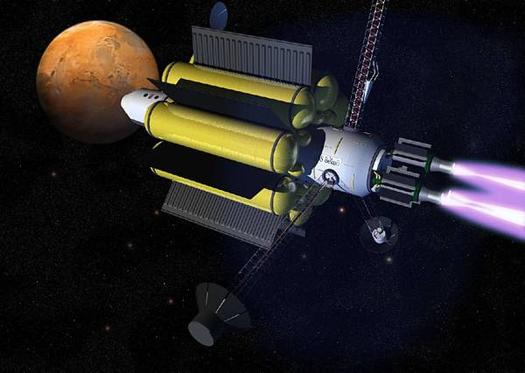
Ad Asrta plans for eventual use of their VASIMR technology for carrying cargo from low Earth orbit to low moon orbit, each journey taking months but using less fuel than chemical rockets. This could serve as the cargo truck spoken of above, though in this form is not suitable for people due to the long travel time.
The long term use for the VASIMR rocket for manned space travel would be to scale it up to be able to make use of a nuclear power source for transporting people to Mars. Such a trip would take days instead of months and would permit the beginnings of a Earth-Mars system economy.
Possible new way of getting to orbit - Airship to orbit
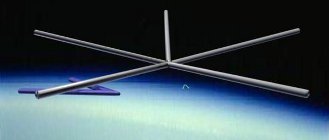
JP Aerospace has been working since 1993 on a novel, two-stage approach to getting to Earth orbit using airships instead of rockets. The approach seems feasible and many of the components and systems have been tested and the work is ongoing with tests flights done every year since.
|
References:
1. Rocketeers Michael Belfiore, HarperCollins Publishers,
2008. ISBN 978-0-06-114903-0
2. Money Backing the Private Space Industry... Part 3--Robert Bigelow.
The Space Monitor,
February 11, 2007
3. Moon dreams - The Americans may still go to the moon before the Chinese.
The Economist,
February 18, 2010
4. Commercial Communications Satellites for the Moon.
IEEE - Inside Technology Spectrum,
by James Oberg, February 2009
